Captured during the Presidential Debate on October 22, 2020
In my previous post I quoted Daisaku Ikeda who said, “The poetic spirit has the power to re-tune and reconnect a discordant, divided world.” Sadly, the person pictured above is not manifesting what Mtshali called “the force that makes us decent people, people who are filled with empathy for those in need or pain, those suffering from injustice and other wrongs or societal ills” (See First Poems). 45 and his supporters would do well to read this daily encouragement, also from Ikeda:
The misfortune of others is our misfortune. Our happiness is the happiness of others. To see ourselves in others and feel an inner oneness and sense of unity with them represents a fundamental revolution in the way we view and live our lives. Therefore, discriminating against another person is the same as discriminating against oneself. When we hurt another, we are hurting ourselves. And when we respect others, we respect and elevate our own lives as well.
I put together a found poem from headlines and stories in the news today. The inspiration for the format, repeating the word maybe, came from a sentence about rat hair in an article about Florida using radioactive gravel to build roads.
Maybe
Maybe rat hair tastes like caviar
Maybe radioactive phosphogypsum
is as safe as regular gravel
Maybe the mute button will not come into play as massive plumes of smoke rise
Maybe the 5 will be accounted for
Maybe the 10 bodies bleeding in the Lagos streets are really part of an American Movie
Maybe 1.14 million is just a big number and not a body count
Maybe the 71,697 will all be mild cases
Maybe the WHO is wrong about Remdesiver
Maybe there are no curfews in France or the Czech Republic
Maybe they’re not suppressing the vote in Florida
Maybe curbside voting in Alabama will be restored
Maybe Sudan just wants to restore normal relationships with Israel
and is not about stabbing Palestine in the back
Maybe Amy Coney Barrett won’t be confirmed
Maybe women won’t need abortions in Poland anymore
Maybe ICE didn’t sterilize those women
Maybe the billionaires have not become $93 billion richer
Maybe the Google wall will keep asylum seekers from crossing the border
Maybe the 545 children will be reunited with their families
In 1983 I began practicing Nichiren Buddhism with the Soka Gakkai and took as my mentor in faith and life Daisuku Ikeda, Buddhist “philosopher, educator, author, and nuclear disarmament advocate,” as Wikipedia describes him. He is an immensely prolific author and has written numerous commentaries on Nichiren’s teachings, as well as essays, weekly newspaper columns, children’s books and volumes of faith encouragement. At age 65, he began writing a novel documenting the growth of the Soka Gakkai that grew to 30 volumes. He finished Volume 30 last year. He has published numerous dialogues with world leaders, scientists, artists, historians, and political activists, but he also writes poems in the Japanese Waka tradition to encourage practitioners, and he is an inveterate photographer.
Photo by Daisaku Ikeda
My mother, a life long Christian, who had worked for church organizations for a good part of her adult life, converted to Buddhism several years before I joined. I saw the positive influence it had on her outlook on life and the opportunities that opened up for her after she began her practice. I was moved by the deep kindness of the Japanese pioneer members and the experiences, energy and conviction in the practice manifested by people I met from different races, previous religions, and from many different walks of life, who were seeking to manifest the Buddhahood or the enlightened nature of their own lives and to help others do the same. When my newborn son died at 10 days of age, I found comfort in Nichiren’s views on the eternity and unity of life and death. And when I returned to graduate school at City College in the 1990s to finish up a degree in creative writing I had begun at Columbia more than 15 years prior, I wrote this poem about my Buddhist practice. I’ve revised this poem many times. I feel like something is missing between the nursery of the lotus line and the next one about kneeling before the altar, but it serves as an attempt to express my belief and practice in poetic form.
my life, your life, the mystic life force of the universe
expressed in the breadth of seven characters
whether it all began with an enormous BANG or not
This subatomic, super galactic communion
of dust, of slime, of bloody ore
of H20 and air as imperceptible as eyebrows,
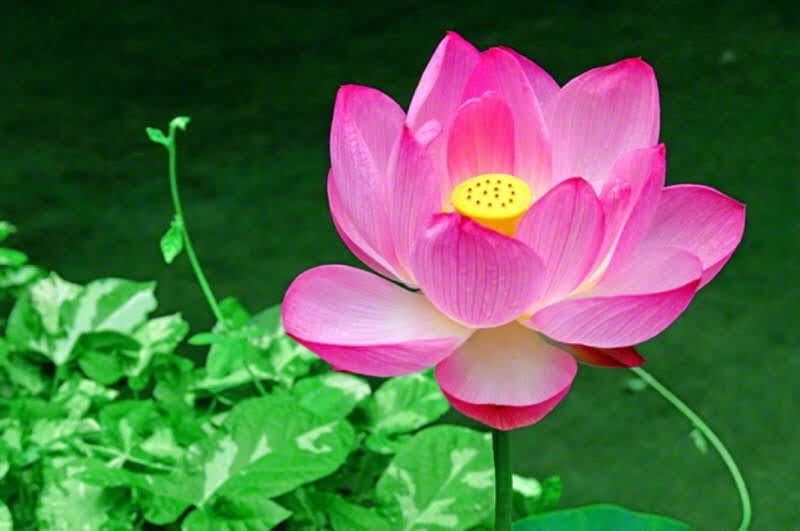
the muddy swamp, the nursery of the lotus.
Kneeling before the scroll of pulp and sumi
I board the “ship to cross the sea of suffering”
And fueled by the engine of my earthly desires
I chant the mystic phrase that redirects my course—
Nam Myoho Renge Kyo, Nam Myoho Renge Kyo, Nam Myoho Renge Kyo
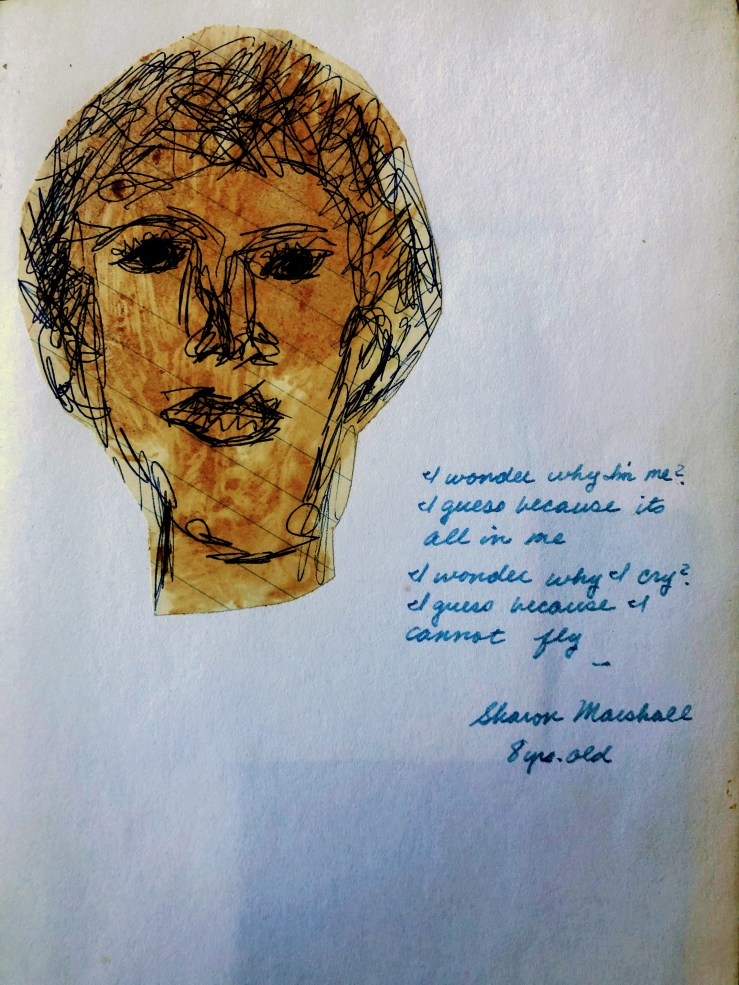
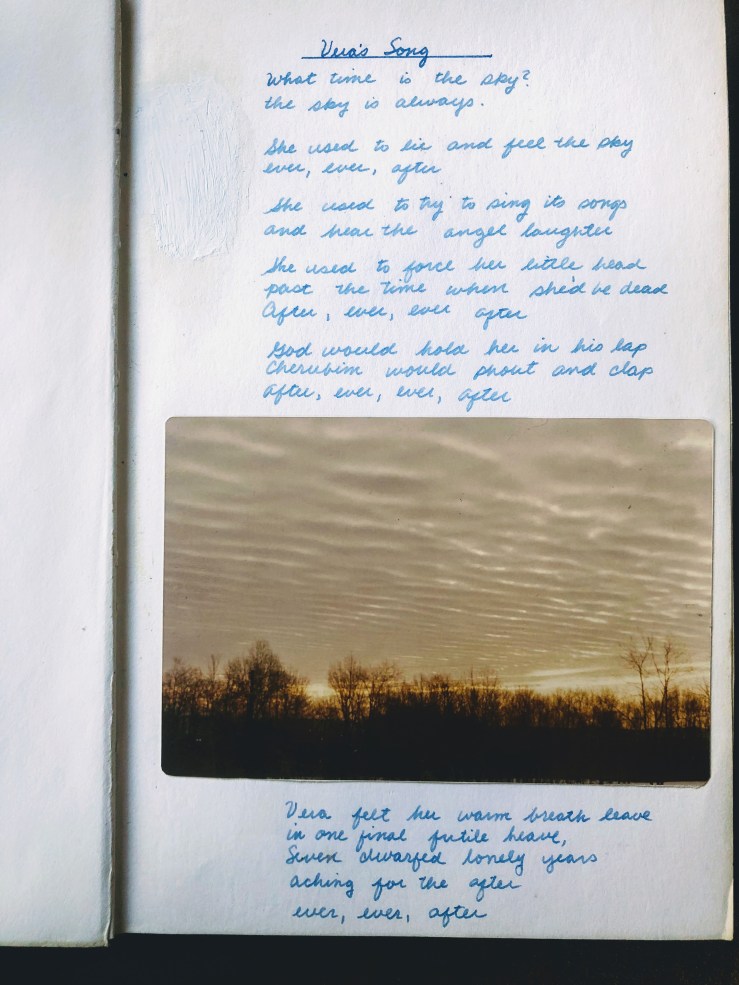
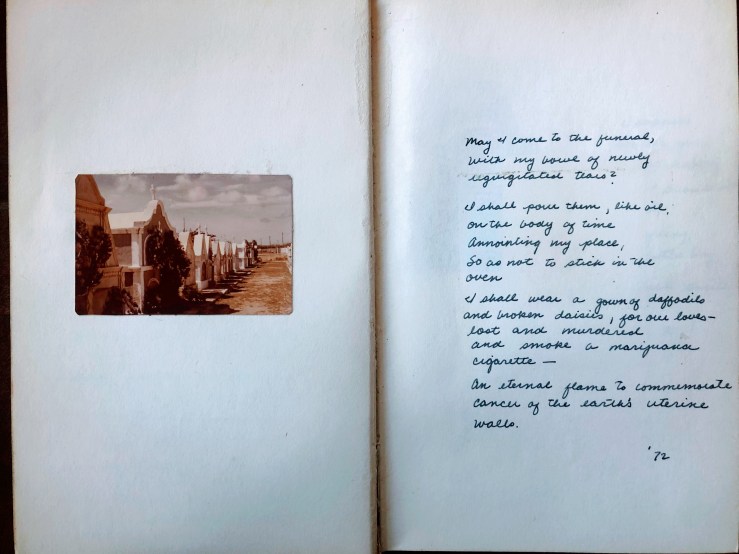
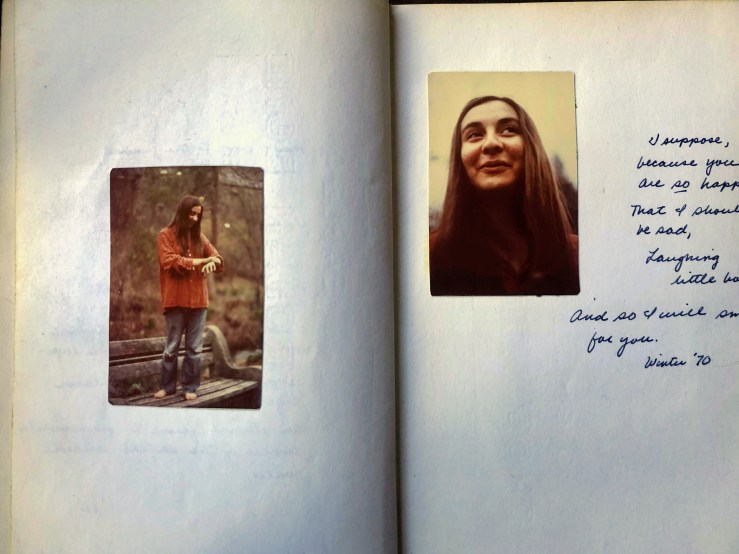
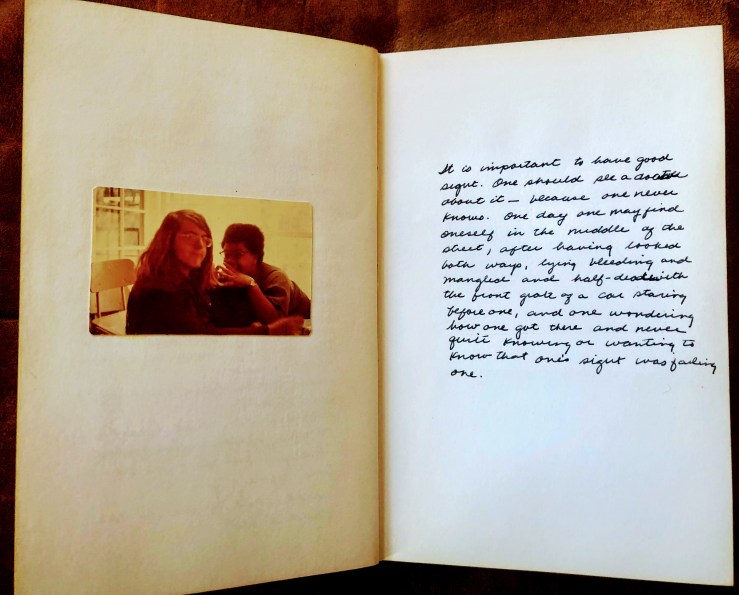
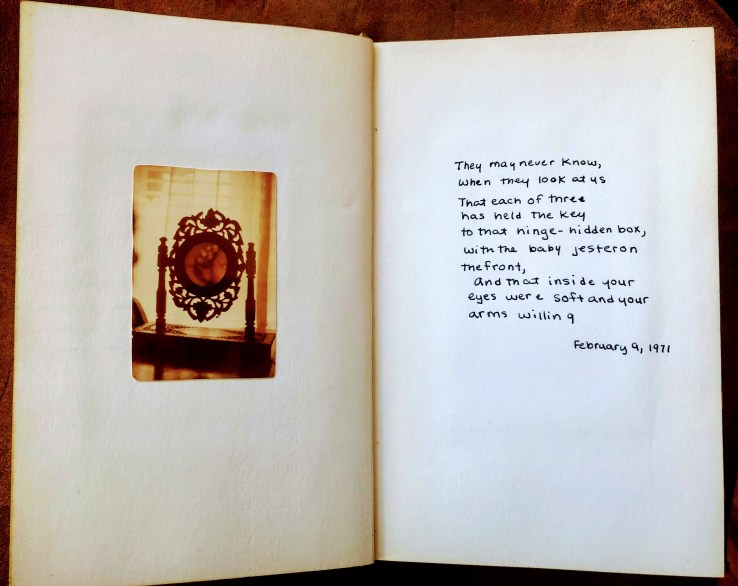
I began writing poems to express adolescent longings and philosophic musings, as many young people do, in my teens, around the same time that I took up the guitar. Most of the surviving poems make me cringe now, as juvenalia will do. But at the time I set a few of them to music. Although I was no Odetta (she was an inspiration) or Joan Baez (she was an inspiration) or Bill Withers (he was an inspiration) few activities made me happier than singing the words I had written and accompanying myself with simple chords. It became my way of being in the world and of speaking out against the injustices of racial and gender inequality and the war in Vietnam (although I only performed for my mother and my best friend Heather). A couple of years after I began playing the guitar, or maybe it was at the same time, it was all so long ago, I started taking pictures and pairing the images with poems. I had a good eye, but not a lot of technical skill in terms of figuring out the right aperture sizes and mastering concepts like depth of field. But that didn’t stop me. And looking back, I see that I longed for multimodal expression decades before I came to know what it was.
This fall semester, the first essay I had students read was “Each of Us a Poet,” by Daisaku Ikeda in which he writes:
The poet’s eyes discover in each person a unique, irreplaceable humanity. While arrogant intellect seeks to control and manipulate the world, the poetic spirit bows with reverence before its mysteries.
***
When the spirit of poetry lives within us, even objects do not appear as mere things; our eyes are trained on our inner spiritual reality. A flower is not just a flower. The moon is no mere clump of matter floating in the skies. Our gaze fixed on a flower or the moon, we intuit the unfathomable bonds that link us to the world.”
Each of Us Poet, Daisaku Ikeda
In the essay he says, ” The poetic spirit has the power to re-tune and reconnect a discordant, divided world.” And he gives as an example Nelson Mandela reading the poems of South African poet Oswald Mbuyiseni Mtshali, and “drawing from them energy to continue his struggles.” Mtshali and I, as it turns out, were in the same class at the Columbia University School of the Arts in the mid 70s.
I remember meeting Mtshali, who was much older than me, at a party and feeling silly and frivolous in his presence. His book Sounds of a Cowhide Drum would have been published by then. As I recall he was sitting in a plush armchair in the apartment of one of the professors, surrounded by other students who were in awe and who knew his reputation. I missed out on many opportunities in those days because I was so unsure of myself and had not found a way to deeply connect with people around me or to connect my personal struggles with any sort of collective movement for change—but that’s another story. Ikeda says that Mtshali used poetry as a weapon against apartheid and that Nelson Mandela was inspired by his poems. He quotes Mtshali who says that poetry is “the force that makes us decent people, people who are filled with empathy for those in need or pain, those suffering from injustice and other wrongs or societal ills.”
Mtshali’s description of poetry sounds very much like the “mystic life force of the universe” that Nichiren named Nam Myoho Renge Kyo. And when Daisaku Ikeda speaks of the poetic spirit I can’t help thinking it’s a way of naming the Buddha nature inherent in all things without using the language of Buddhism. Each of us a poet. Each of us a Buddha. I have not known much success as a poet, fiction writer, photographer, or as guitar player, but I have tried to teach in a way that embodies the poetic spirit, to see each student as “unique” and “irreplaceable” and to make each class an opportunity for all of us to connect and become better more empathetic people, who feel compelled to speak out and take action against injustice.
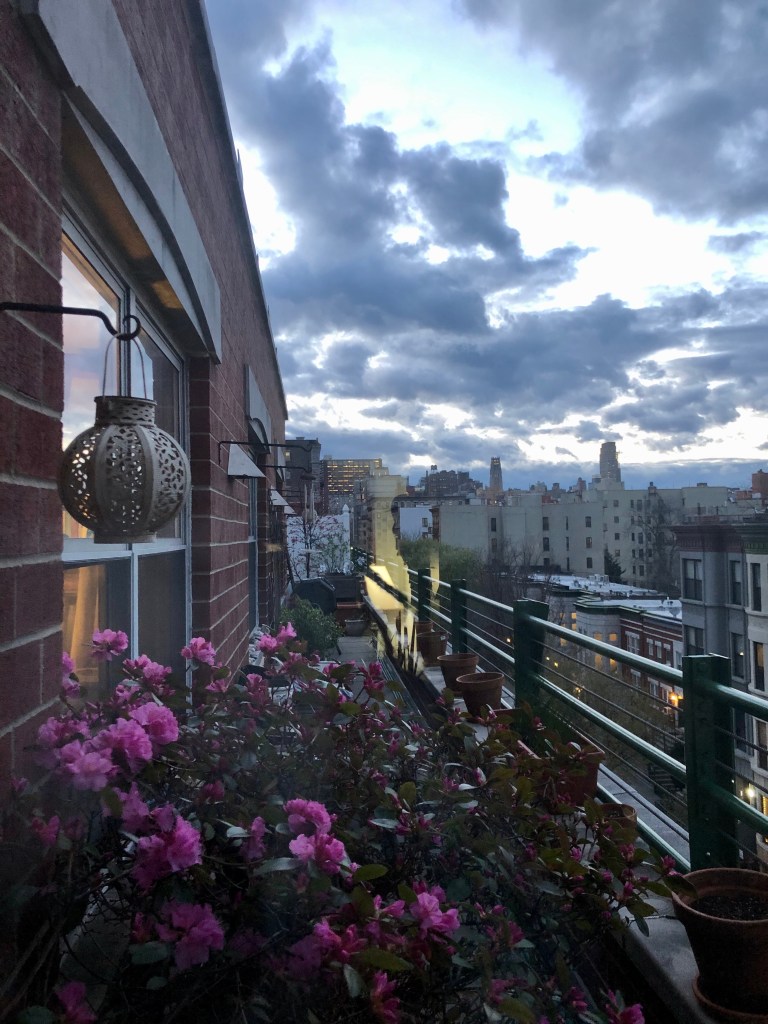
View from our deck with Riverside Church and the lighted windows of St.Luke’s Hospital in the distance
And I have been for going on 30 days. This does not make me unique, far from it. Everyone knows we’re in the midst of a global pandemic and the way to control it is to shelter in place, everyone except those stupid and murderous Republican governors and politicians who worship at the altar of our wicked and deranged 45th President. We are, in New York, in the midst of the midst of the pandemic–the epicenter, as Amy Goodman insists on pointing out daily on her TV and radio broadcast Democracy Now. I love Amy; she is definitely one of my s/heros, a ground-breaking journalist whose news stories and the people she interviews have widened my world. Her eyes are clear and preternaturally kind under those now nearly steel gray side-bangs, her questions are informed and pointed, but I’m thrown off by the thrill of sensationalism that I hear in her voice every time she says “the epicenter of the pandemic.” I guess even truth-telling progressive newscasters are not immune to the perverse fear-laced frisson humans experience when we contemplate sickness and death on a catastrophic scale.
As of yesterday there were at least 222,284 confirmed cases and 12,192 confirmed deaths in New York. One of the people who died a couple of weeks ago was my cousin, Kelly. I have not seen Kelly in 40 years. She was a young girl when we visited her and her brothers and sisters in Far Rockaway, shortly after my husband and I were married in the late Seventies. They made me and my mother, their beloved aunt, and my new white husband feel at home in a run-down apartment and circumstances of utter poverty that I had escaped by dint of my mother’s indestructible will as well as the incredible luck of having been chosen to receive a Seven Sisters education. Kelly, I hear, from another cousin’s Facebook post was living in a homeless shelter. I don’t know, for sure, but I’m guessing she might have suffered from asthma. Our cousin posted a picture of Kelly and her teenaged daughter, a pretty girl who looked a lot like Kelly with long black braids and the pale complexion they inherited from my uncle.
Yeah, so I’m staying at home. I am fortunate to be able to. I am privileged, even though I am a 60 something black woman with heart disease and hypertension and borderline blood sugars. But I have good health insurance from my job. It allows me to access excellent medical care when there isn’t a pandemic–a cardiologist who calls me out of the blue to make sure I am following her orders, a primary care physician I’ve known for 25 years who is always available. Unlike those in the medical and helping professions who have pledged to serve and routinely expose themselves to danger, and unlike the “essential” workers who make less than $15 a hour in shitty service jobs with no sick leave that make it possible for the rest of us to live, I can stay at home. And unlike the 1 in 7 Americans who have lost their jobs in 4 short weeks, I can work from home and teach my classes and discharge my administrative duties (doubt I’ve ever used that phrase before) on my university issued computer. Unlike millions (billions) of people around the world who lack access to clean water, food, and shelter, I can do what is necessary to protect myself from infection and increase my chances of staying alive. And even as I question why we live in a world in which my life is deemed more valuable than theirs, by virtue of my circumstances, I am still able to live it, at least today.
I’ve been fixin to look up my teaching blog again and to start writing something, anything since I keep forgetting to cancel (not sure I want to do this–stuff, if only a little bit, is archived here) and keep getting charged an annual fee. It’s good to have now that I need to really get going on this poster presentation for the ACMHE conference this weekend and I’m supposed to be working on that. And I do want to write about what I’m teaching this semester–wait–you’re teaching something other than First Year Writing? Okay, how I’m teaching it. Changes I’ve made, etc. Oh, that’s kind of what the poster presentation is about. Toodles. Would anyone under 65 know what toodles means? The worst thing about getting old is that all your vernacular expressions date you. You are literally of another time and maybe place. Can I use this as a space to rant about how woefully ignorant today’s students are? Better not. Because they know stuff I don’t know. They know different stuff and they are the future. Okay, my job is to help ensure that they have one. That’s how I see it. My teaching. Hello! Look up from Snapchat a minute and pay attention to what’s about to happen in the Supreme Court. The thing is their ignorance has been cultivated. It’s been bought. I ramble. My specialty, and I’m not brilliant, so it’s not illuminating to others just myself, but, but, but, what was I going to say? People are more important than things. That’s what my mother used to tell me before she even became a Buddhist. I think that’s what I’m trying to get across with every lesson, every assignment, hopefully every word I utter in class.
I don’t know what it is with me and ellipses. It’s probably related to my general fear of getting started and then not being able to finish. Which brings me back to the title of this post. I sort of forgot that I had upgraded to premium on WordPress a couple of years ago until I saw a charge for it on Paypal last September, and then I promptly forgot again until this week when I decided I might as well reflect on the semester in the place where I am paying to assert my presence in the blogosphere, or whatever, if folks even use that term anymore.
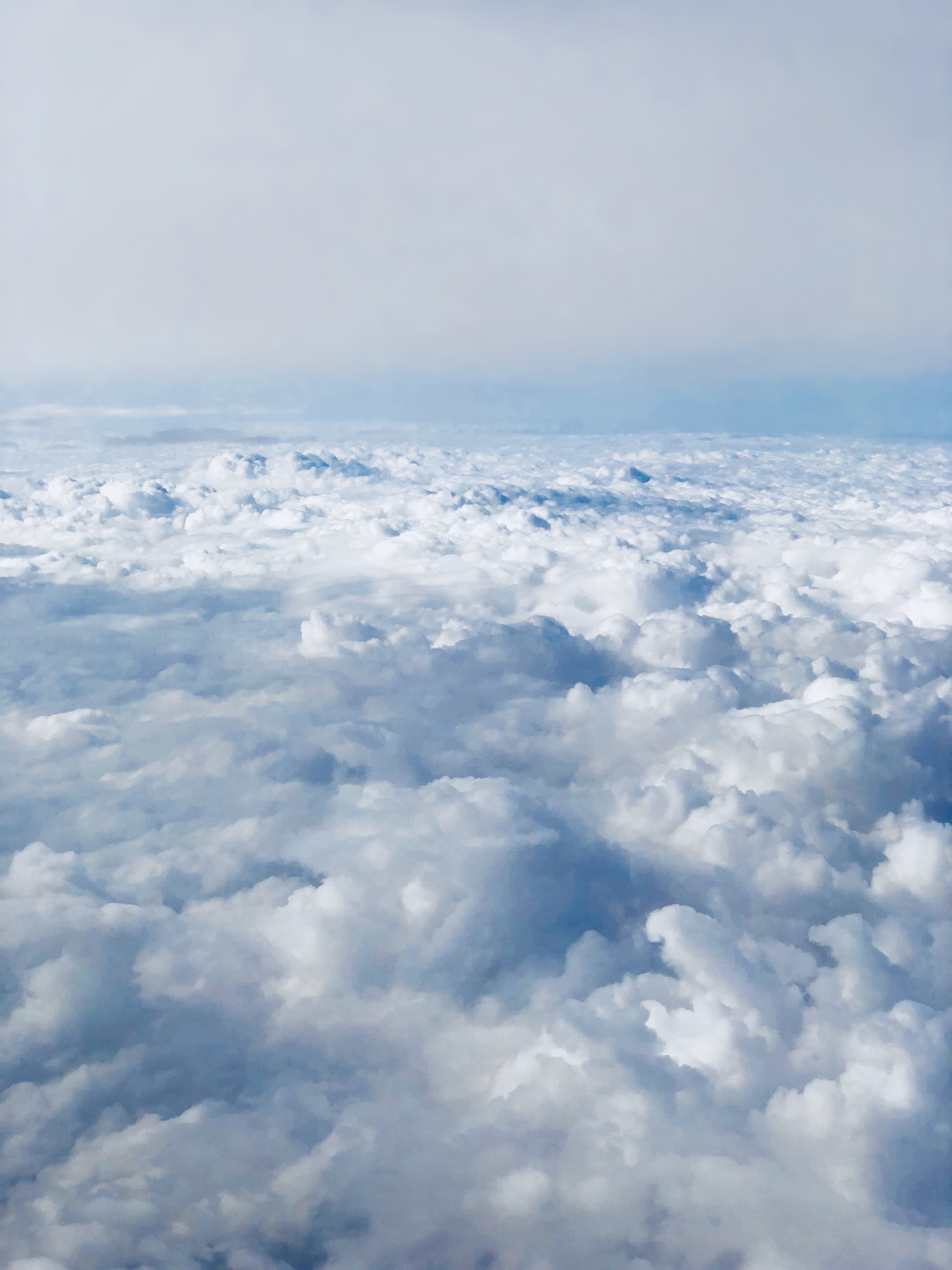
I like pictures, so I decided to post this one I took the last time I was on a plane.
It’s been nearly 5 months since I attended the DMAC institute. I have saved all the resources and bookmarked all of the links, and I taped many of the lectures using Notability, but I fear that I’ve forgotten all of the technical things we were taught. I meant to get back to my original entry about the experience and to explain the process and discuss the drafts of my concept in 6o project, but life intruded: I took students to Rome.
Coliseum
Students in Front of Coliseum
Graffiti on Wall Near Tiber River
I spent time with my grandchildren.
I sustained a knee injury and got treatment for it. I went to a wedding in Vermont, tended my garden, worked on my novel, and read to prepare for the fall semester and my course entitled, “Writing to Make Things Right: Bias Privilege, Race and Struggles for Freedom and Justice.”
Vermont wedding
Basil and marigold
Books I read or consulted
Students writing on the white board
Now it’s time to apply what I went to learn because my students have begun their audio essay project. Thank you, Cindy Selfe for the student audio work you posted on your Soundcloud account, your assignments, your rubrics, your scholarship. But, of course, being the ornery (my mother might say), independent person I am, I have decided to approach the assignment my way, which is probably what you intended for us to do.
My students have been writing and sharing journal entries in response to readings, videos and prompts about empathy, privilege, bias, intersectionality, race, language practices and personal experience. I asked students to take a journal entry that they found compelling and to turn it into an audio essay—using the term essay loosely since some of the entries are narratives or poems, or to interview someone and record it based on the topics that came up in class including racial identity, immigration, language use, encounters with police, white privilege. Students listened to audio compositions on Facing Race, Storycorps, NPR and The Third Coast International Audio Festival Websites. I asked them to list the characteristics of the audio works and to respond to two prompts: “Why audio?” and “What makes a piece compelling?
Some students’ responses:
Why audio?
Audio has the unique power to force a listen to visualize the same way they would if they were reading a book, but with an added element of focus because they do not have to read at the same time.
What makes an audio essay or piece compelling?
Audio essays in particular has so much more emotion than text by itself. In the audio essays I listened to for homework, I found it interesting how powerful the silence was. Especially in the extremely emotional ones, the silence was difficult to listen to because you couldn’t tell if the speaker was just taking a pause, or getting emotional. I found myself tensing up at those pauses because I knew the story was going to become more difficult to listen to, as the speaker was having a hard time telling it. (Eve)
Characteristics of audio essays
Individuals explaining something that is meaningful to them
Individuals share their story
Hear the emotions (ex: when speaker is on the brink of tears)
Ability to hear the speaker use another tone of voice to represent an outside person
Can hear the speaker’s voice become louder and clearer when he/she talks about something that is very important to their life and values
Audio allows the listener to feel as if he/she is with the speaker. Audio is different from reading or watching something because you can hear the speaker’s emotions. The listener can more clearly tell if the speaker is being sarcastic or if a certain topic makes the speaker sad or happy. By hearing the tone of the speaker’s voice, it increases the ability for the speaker and listener to have an emotional bond. In audio, the speaker is able to say something then play something else (like music or conversations) that is related to what the speaker just said. The other voices besides the main speaker help provide live and vivid details of what the speaker is talking about. If a writer did this, it would not have the effect because the words on the paper or screen would have no sound behind it. Without sound, you don’t get a clear image of what is happening. Example: hearing a song and reading a song are two completely different things. When we hear the speaker speak, we not only get to hear it but we get to think about it at the same time. If it was not audio, we would only be able to think about it but with a less imaginative mindset.
What makes an audio essay or piece compelling?
What makes an audio essay or piece compelling is that listeners get the chance to listen. In society, people are often too lazy to read something, so if they are given a chance to hear the same words that are written, it grabs their attention. When we listen, we absorb more and are more attentive. We don’t realize it, but our voices have power. When listeners hear the voice of the speaker sharing his/her story or opinion, listeners get the chance to actually feel how the speaker feels. If we read the same words the speaker said, we wouldn’t get the same vibe because we read it in our own voice. If we read something, what stands out to us the most, might not be what is most important to the writer. By hearing it, we understand and see with our ears what the speaker wants us to grasp and what points are important. (Christie)
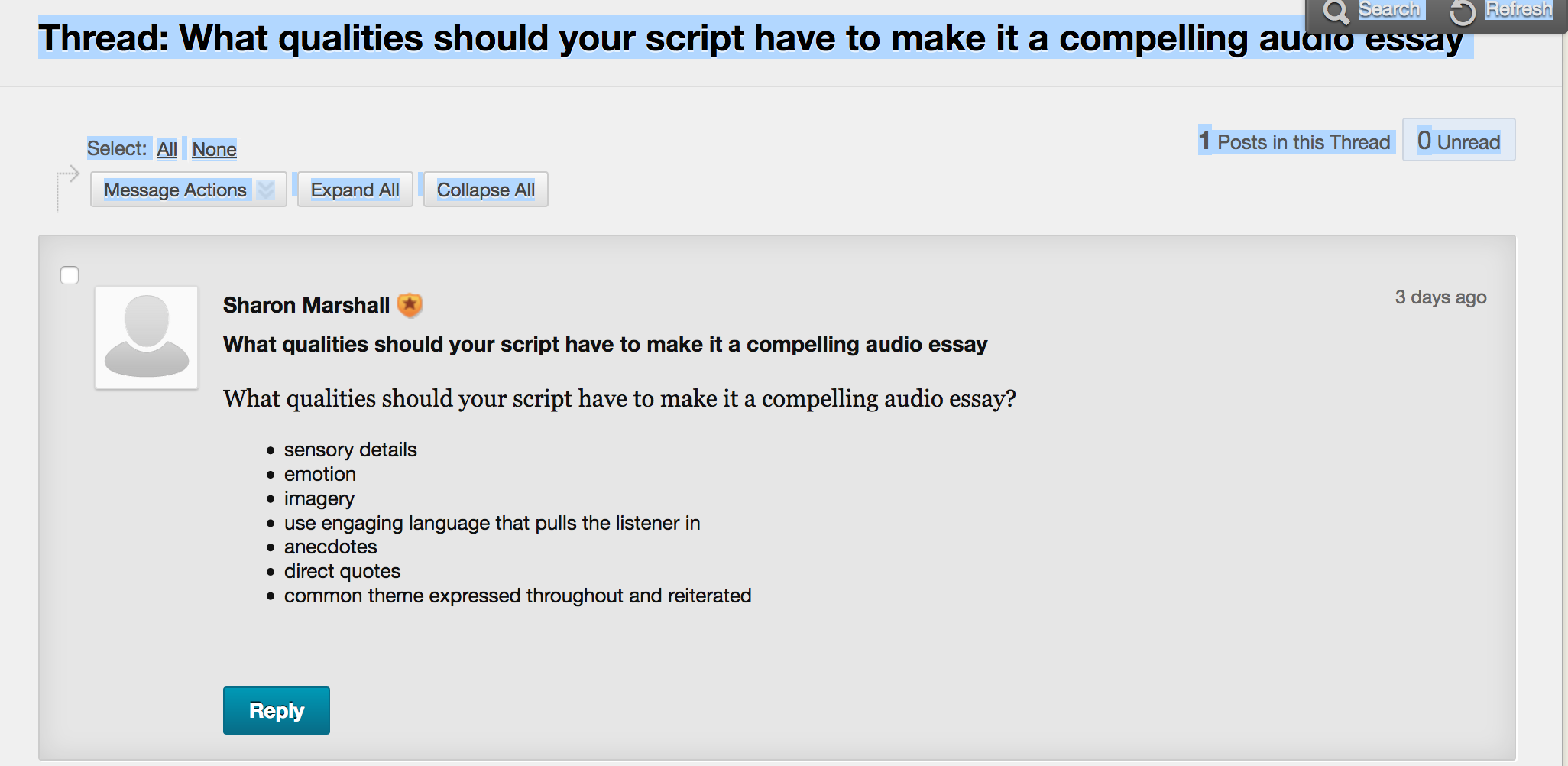
Students were then instructed to revise a piece from their journal that they wanted to record based on those criteria. At the next class they shared their list of criteria and their answers to the questions in small groups and before they read their drafts to each other, we came up with a set of qualities they wanted to see in the scripts.
They brought four copies of their scripts to class. Originally, I was going to let them go ahead and record after they got peer feed back, but while they were working in groups of three, I read the fourth copy of some of the scripts and decided I had to intervene (read freaked out) and give my version of feedback before recording commenced.
I was overjoyed when I was selected as a St. John’s University Center for Teaching and Learning Technology Fellow in 2015 because I knew the stipend would allow me to attend the Digital Media and Composition Institute (DMAC). Cynthia Selfe, co-director of the Institute along with Scott Lloyd DeWitt, was the keynote speaker a few years ago at a conference I attended at Bard college. I was intrigued by her entire presentation, but my ears perked up when she played audio essays composed by her students and explained about how audio essays could be taught using the same rhetorical guideposts as written essays, which makes sense since, as she has pointed out, the principles of rhetoric that we rely upon were originally developed for oral presentations, i.e. speeches. Several years prior at the 2009 Conference on College Composition and Communication (CCCC) held in San Francisco, I had succumbed to the enthusiastic haranguing of the DALN folks outside of the Digital Archive of Literacy Narratives booth (one of Selfe’s ongoing projects along with Ben McCorkle at Ohio State University and Michael Harker at Georgia State University) and ended up sitting down for an extended interview that helped me see how much growing up in the Black church as the daughter and granddaughter of ministers had influenced my literacy.
Some Background
In Multimodal Composition, Resources for Teachers Cynthia L. Selfe, the editor and Pamela Takayoshi begin chapter one by writing:
It is fast becoming a commonplace that digital composing environments are challenging writing, writing instruction, and basic understandings of the different components of the rhetorical situation (writer, readers, texts) to change. Such changes are both significant and far-reaching–and they promise to be disruptive for many teachers of English composition. For many such teachers at both the secondary and collegiate levels, the texts that students have produced in response to composition assignments have remained essentially the same for the past 150 years. They consist primarily of words on a page, arranged into paragraphs. This flow of words is only occasionally interrupted by titles, headings, diagrams, or footnotes.
…The information within these [texts] is conveyed primarily by two modalities–words and visual elements (e.g., layout, font, font size, white space)–and is often distributed in the medium of print. Importantly however, these texts do not resemble many of the documents we now see in digital environments that use multiple modalities to convey meaning–moving and still images, sounds, music, color, words, and animations –and that are distributed primarily, albeit not exclusively, via digital media (e.g. computers, computer networks, CDs, DVDs). Although composition theories have evolved to acknowledge and study these new multimodal texts (texts that exceed the alphabetic and may include still and moving images, animations, color words, music and sound), the formal assignments that many English composition teachers give to students remain alphabetic and primarily produced via some form of print media. (1)
Why Multimodal Composition?
In an increasingly technological world, students need to be experienced and skilled not only in reading (consuming) texts employing multiple modalities, but also in composing in multiple modalities, if they hope to communicate successfully within the digital communication networks that characterize workplaces, schools, civic life, and span traditional cultural, national, and geopolitical borders.
If composition instruction is to remain relevant, the definition of “composition” and “texts” need to grow and change to reflect peoples’ literacy practices in new digital communication environments.
The authoring of compositions that include still images, animations, video, and audio—although intellectually demanding and time-consuming–is also engaging.
Audio and visual composing requires attention to rhetorical principles of communication.
Teaching multimodality is one pathway to accomplishing long-valued pedagogical goals [such as Dewey’s ideas about the importance of a learner’s participation and reliance on her cultural experience and discourses] (3-4)
Selfe, Cynthia L. Multimodal Composition: Resources for Teachers. Cresskill, NJ: Hampton, 2007. Print.
Scott DeWitt on Multimodal Composing
I had already embraced and encouraged my students to explore some of the possibilities for multimodal composing described above. They were creating computer and online documents, webpages that required them to consider effective design principles that made use of color, still photographs, video, charts, etc. I had even created a research project called 13 Ways of Looking at ___________that required them to collect a variety of sources in different modalities and gave them the choice of publishing their research findings in any number of forms:
PRESENTATION—Choose a medium to present your research and conclusions to the class and perhaps an outside or Internet audience. Think about what you want to get across to your audience and then figure out a way to do it. You can make an audio essay, a video or digital story, a webpage, a work of out, a Facebook page, a Tumblr, a physical object, a poster, a photo-essay, artwork a Prezi. You can write and perform a play, spoken word piece, dance or song (I will ask you to make video of your live performance or allow me to do it.) Be creative! Whatever you do, it should communicate what you learned and would like to share with others about the topic.
But when it came to creating their own work in audio and video, they were mostly on their own. I figured that as digital natives most of them could figure it out, and if they couldn’t they would choose another mode. But the thing is I really wanted to know how to make video and audio compositions myself because one of the things that makes teaching composition exciting is my own composing—thus my domain name pedagogy-as-poetry, and there’s no better way to learn and to learn how to teach something technical than to try doing it yourself.
The First Assignment:
Soundtrack In 60
In this assignment, your task is to create a draft soundtrack for your Concept in 60 video. You will record two audio files and–combing them with some music and/or sound–edit them using Audacity. The goal is to create a layered audio composition of 60 seconds or less, which you can then use a s soundtrack starting point for your Concept in 60 Video (DMAC Assignment Sheet).
Your soundtrack should include, as separate layers,
a self-recorded audio text (2 minutes or less), which can take the form of a memory, a literacy narrative, a manifesto, and environmental recording, a statement, or any other audio genre. This text should be focused on something to do with literacy/composing/multimodality;
a self-recorded reflection on the significance/import of the text you have just created (2 minutes or less);
additional music and/or sound files
I recorded it in a piano practice room in Hughes Hall where he spent time playing the piano during the DMAC sessions. I asked him to play Misty and I recorded it. I got the idea of recording him playing from another participant, Miller Newman, who asked if he could play the Negro national anthem–“Life Every Voice and Sing.” Without the music, he couldn’t.
Grammar of Audio
Concept in 60
For this assignment, you must create a conceptual 60-second video text that explores a dimension of literacy, composing, and/or multimodality.
Final draft
First Draft
My original idea was to do something around the term multimodality, so I recorded some participants saying the word multimodal or multimodality.
Second Draft
New Idea
Third Draft
Fourth Draft (Really!)
Problems with this draft:
70 and not 60 seconds long
photographs that were supposed to represent marital history: wedding cake picture, me and Ed with Jana on his chest, Bar Mitzvah in the 90s with Shane, pic Ed and me after the children were grown were unevenly timed and a couple went by too fast
Since I began teaching more than 20 years ago I’ve had students read drafts of their work aloud to me during conferences. I’ve found it the best way to address grammar and syntax issues in their writing In the past several years I’ve given up It’s also helped with focus. and something about the humanity of the student…the teacher as audience —a coach. More to come…
to go public with this. Well, it’s not really public until there is a following. This unburdening, challenging the fear. Black people live in fear is what TaNehisi Coates says. He acknowledges that we fear for our lives our bodies even when we are not aware of it. The elevated blood pressure. I think of those little girls made into human bombs. She would not detonate because she saw her mother and father and her little sisters in the crowd. Today Sonia Sanchez said our mission is to find out what it means to be human. And yesterday I read that horses recognize angry human faces. Their hearts race. That little girl. How much terror can the heart tolerate without automatically stopping?












 Pedagogy as Poetry